A breakdown is most expensive when you are busy
A machine that stands still costs money. In lost production, in service visits, in staff waiting, and in delivery commitments that cannot be met. The cost is highest when it happens at the worst possible moment: in the middle of your busiest season, with orders waiting.
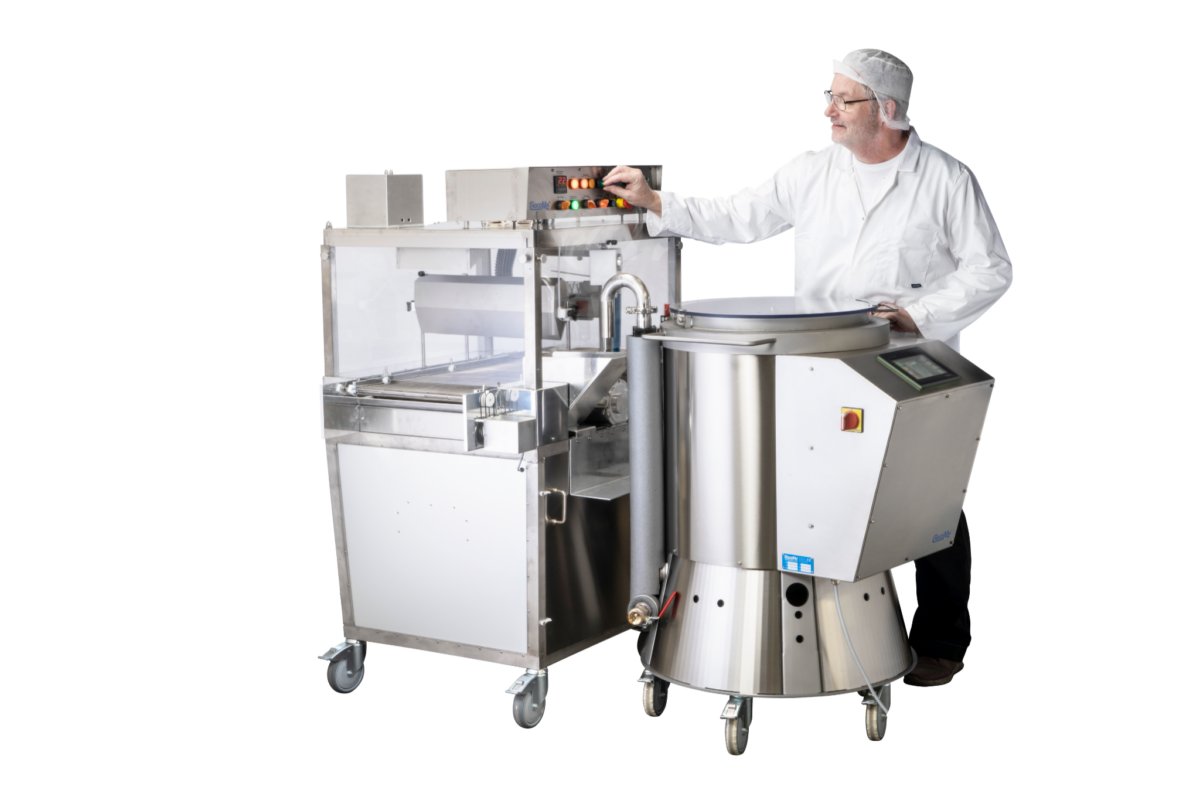
We see it every year. In the weeks before Christmas, Valentine’s Day and Easter, the urgent calls come in. A wire has snapped in the mesh belt on an E220 enrober. The carbon brushes in the blower motor on a 2MP enrober have worn down. Neither is a dramatic fault. Both are the kind of wear that builds up quietly over months of running, and both stop production at the point in the year when stopping costs the most.
When production is running flat out, there is rarely a good time to take a machine offline. A fault that appears then forces an awkward choice: stop production, or keep running with a problem. Neither is a good place to be.
Most producers have no service routine, and that is understandable
In our experience, very few chocolate producers have a fixed schedule for checking their machinery. The machine runs, so there is no reason to look at it. Few people plan a service check for a machine that is working.
That is a reasonable way to think, and it is also why faults tend to appear at the point when the machine is under the most load. Wear does not announce itself. It accumulates through the busy periods and gives way when the load is highest.
A planned check is a calmer check
In a quiet period, a check can be planned rather than rushed. The machine is available. There is time to order any parts that need replacing, without production waiting on them. And nothing depends on the machine being back within the hour.
We should be honest about the scope. There is a limit to how much you can assess from the outside, and not everything that wears will show itself. But some of it will, and those are the things worth looking for.
Are the vanes in the pump worn? Are the POM bearings worn? Is chocolate escaping anywhere a seal or gasket has stopped sitting tight? None of this calls for specialist equipment. It calls for someone to look at the machine properly, at a time when there is time to look.
The point of a routine check is to catch small things before they become large ones: wear in moving parts, temperature control that has drifted out of accuracy, the adjustments that keep tempering and enrobing consistent. These are straightforward to put right during a planned check, and disruptive to discover mid-run.
Parts for machines that have been running for decades
One question comes up more often than any other, usually from producers running older equipment: will parts still be available?
Some parts we make ourselves. These components only exist in Chocoma machines, and for those the answer is normally yes. We can supply parts for any machine delivered within the last twenty years, and in practice we usually manage it for machines that are forty or fifty years old.
The exception is electrical and electronic components. These come from component suppliers and have shorter production lives than mechanical parts. When an original is no longer manufactured, we look for a replacement that fits, and we usually find one.
We do not present this as a guarantee, because we cannot promise what a component supplier will do fifteen years from now. It is simply how it has worked for a long time, and it is worth knowing if you are weighing up whether to keep an older machine running.
How to plan a chocolate machinery service check
Production eases off at some point for most producers. It might be after a season, between runs, or just a few slower weeks. That is the time to have your machine looked over properly, so it is ready and reliable when the pace picks up again.
Start with the operational manual for your machine. It covers the routine maintenance, and it is the right place to begin.
It does not cover everything, though, and we would rather say that plainly. A manual describes normal maintenance on a machine in normal condition. It does not list every part that can wear out on a machine that has been in daily production for years. If you work through it and something looks wrong, or you are not sure what you are looking at, ask.
If there is a Chocoma distributor in your country, contact them. They know the machines and they are closest to you. If there is no distributor in your country, write to us directly.
We have built and serviced chocolate machinery in Denmark for more than 75 years. Write to chocoma@chocoma.com or call +45 3641 4200.